

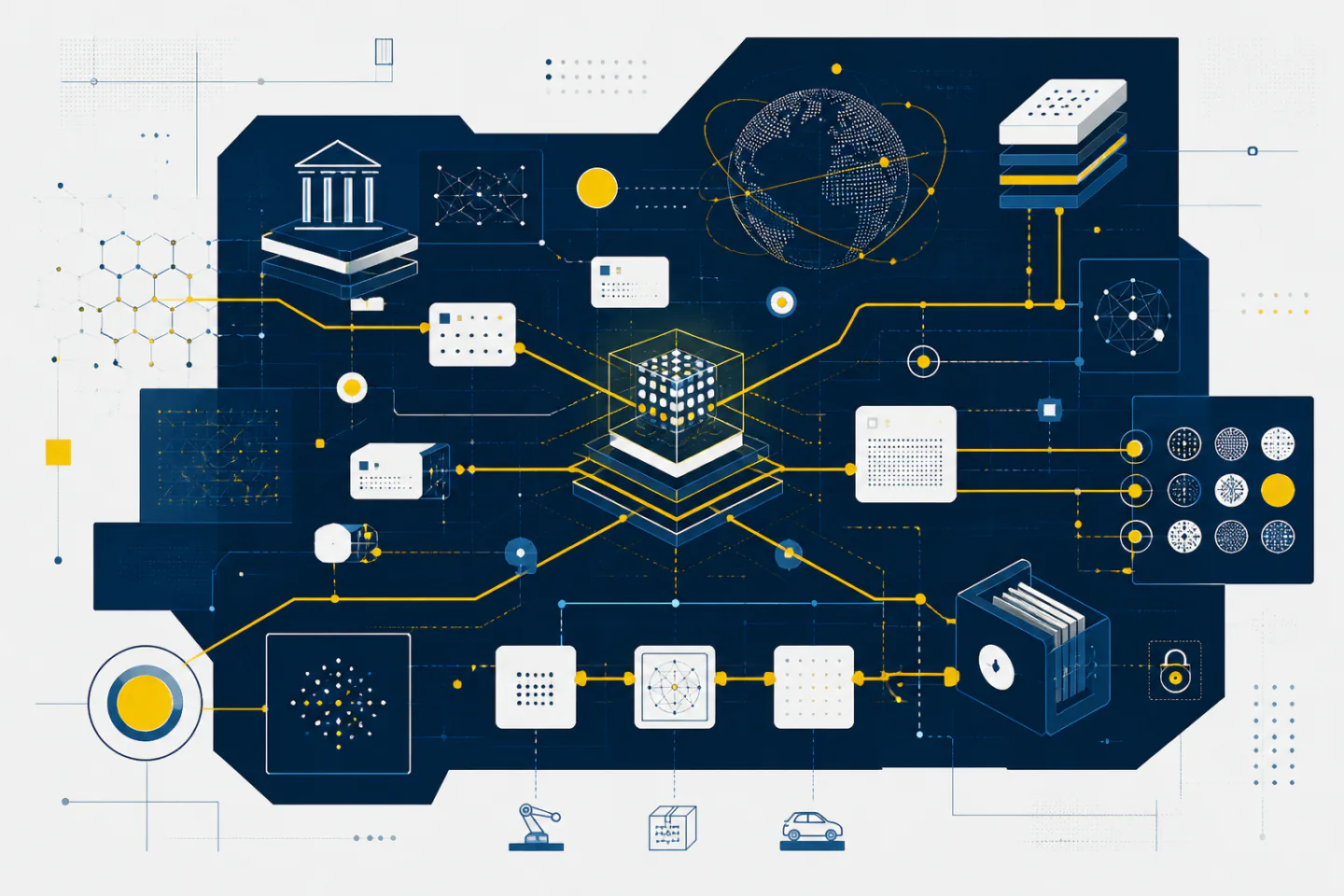
Money in 2050 is likely to look less like a single object and more like a set of connected services. Notes and coins may remain useful, but most payments, savings and transfers will probably be recorded digitally. The important questions are not whether money will use new technology, but who issues it, what claim it represents, how safely it moves and what happens when something goes wrong.
No forecast can identify the dominant system decades in advance. Laws, public trust, political choices and unexpected crises can redirect technical change. A practical view therefore starts with functions that must endure: money needs to provide a widely understood unit of account, a way to pay and a reasonably dependable store of value.
A mixed system, not one universal currency
Households and businesses may use several forms of money without noticing the differences. A wallet could hold commercial-bank deposits, central-bank money and privately issued tokens, then select a suitable payment rail according to cost, speed and acceptance. Taxes, wages and accounts are still likely to be expressed in national currencies because legal and institutional support matters more than the format of a ledger.
Cash may occupy a smaller role while remaining valuable during outages, for private transactions and for people who cannot use a digital account. Removing it before dependable alternatives exist would make the payment system less resilient. Digital inclusion also requires more than access to a phone. Account recovery, accessible interfaces, local support, clear charges and practical ways to deposit or withdraw funds all matter. The World Bank Findex provides a useful framework for examining how people actually use financial services rather than merely whether an account exists.
Programmable payments
A programmable payment follows agreed instructions automatically. A buyer might release funds when a delivery is verified, a business might split income among several parties, or a machine might pay for energy within a pre-set limit. These arrangements could reduce manual invoicing and reconciliation, particularly when organisations already share trusted data.
Automation does not remove responsibility. Every payment needs an authorised payer, a recognised recipient and rules for error, fraud and dispute. A sensor can report that a parcel arrived, but it cannot decide whether damaged goods satisfy a contract unless the parties have defined that condition. Useful systems will combine automatic execution with spending caps, approved counterparties, audit records and a clear route for human review.
Businesses considering programmable payments should begin with a narrow process. They should identify the event that triggers payment, decide which evidence proves it, establish who can pause the process and test how exceptions are handled. The technical rail comes after these controls, not before them.
Public and private digital money
A central-bank digital currency could give the public a digital claim on central-bank money. Commercial-bank deposits are instead claims on banks, while privately issued payment tokens depend on an issuer and its reserves. Those distinctions affect credit risk, legal protection and redemption, even when the balances appear identical in a wallet.
Design choices will determine whether public digital money is useful. Offline payments can improve continuity, but they need limits and a safe way to reconcile records later. Privacy requires both technical restraint and law: authorities and intermediaries should collect only necessary data, protect it and define when it may be accessed. Holding limits may also be used to reduce sudden movements out of bank deposits during periods of stress.
Private tokens can support continuous settlement and cross-border transfers, but users need to know what stands behind them. Before accepting one, a person or business should check who owes the money, what reserves support the claim, how redemption works, which law applies and what happens if the issuer fails. A token that tracks a currency is not automatically equivalent to a protected bank deposit.
Tokenised assets and settlement
Tokenisation records a claim to an asset on a digital ledger. It may help coordinate ownership records, payment and transfer restrictions for securities, commodities or contractual rights. One potential benefit is simultaneous settlement: the asset and payment change hands together, reducing the period in which one party has performed and the other has not.
The token is only as reliable as the legal and operational system around it. Property rights, custody, audits, insurance and court remedies do not disappear when a ledger changes. If the digital record conflicts with an official register or a custodian loses the underlying asset, software alone cannot resolve the claim. The BIS discussion of tokenised financial systems is useful because it places shared ledgers within the wider roles of central-bank money and regulated institutions.
Faster cross-border payments
Cross-border transfers remain difficult because several institutions may handle identity checks, currency conversion, messaging and settlement. Better-connected domestic payment systems could shorten this chain. Shared data standards may also reduce manual repair when names, account details or compliance information arrive in incompatible formats.
Speed alone is not enough. A sender should see the total charge, exchange rate, amount the recipient will receive and expected delivery time before confirming. Recipients need a useful way to spend or withdraw the funds rather than a balance trapped in a closed network. Providers must also explain when a transfer becomes final and who bears loss if it is misdirected.
The U.S. Treasury assessment of money and payments illustrates a durable policy point: new rails can improve payment services without replacing the basic monetary structure. Interoperability, competition and consumer protection may prove more important than any particular technical design.
Automation and financial decisions
Automated systems will probably play a larger role in fraud checks, liquidity forecasting, payment routing and account support. They can compare patterns quickly and handle routine instructions, but they can also make opaque errors. A blocked salary payment or mistaken fraud alert has immediate consequences, so significant decisions need an explanation, an appeal route and accountable human oversight.
Organisations should separate advice from authority. A system may recommend when to pay an invoice without being allowed to create a new recipient or exceed a daily limit. Controls should require additional approval for unusual destinations, changed bank details and large transfers. Logs must show which data and rule produced an action so investigators can reconstruct it later.
Security and resilience
A highly connected monetary system creates common points of failure. Wallet software, identity services, communications networks and account providers can all be attacked or disrupted. Instant settlement can make stolen funds harder to recover, while a widespread outage can stop legitimate payments at the moment they are most needed.
Resilience therefore needs layers. Individuals should use strong authentication, protect recovery methods and verify changes to payment details through a separate channel. Businesses need transaction limits, divided responsibilities, tested backups and a manual continuity plan. Providers should support secure updates, monitor unusual activity and practise recovery from failed dependencies.
Encryption will also change over time. Financial systems should keep an inventory of where cryptography is used and be able to replace algorithms without rebuilding every service. The broader future of financial infrastructure depends on records and payment systems that remain trustworthy as threats and technical standards evolve.
How to prepare without guessing the winner
People do not need to predict a winning currency or network. They can preserve access to more than one payment method, understand which institution holds their money, keep account-recovery information secure and compare the full cost of transfers. They should treat irreversible payments with particular care and avoid assuming that a familiar interface provides familiar legal protection.
Businesses can map how money enters, moves through and leaves the organisation. For each rail, they should record settlement timing, fees, currency exposure, responsible staff, failure procedures and applicable controls. New payment methods should be tested with limited values and clear exit criteria before becoming essential to payroll, suppliers or customer refunds.
- Check the legal claim behind each balance or token.
- Confirm charges, exchange rates and finality before payment.
- Use limits and separate approval for unusual transfers.
- Maintain an alternative for outages and account lockouts.
- Review privacy, recovery and dispute procedures regularly.
By 2050, the visible act of paying may become almost effortless. The hard work will remain familiar: establishing trust, protecting access, settling disputes and keeping the system available. The most useful future money will not be the most novel. It will be the form people can understand, verify and use safely under ordinary conditions and during disruption.